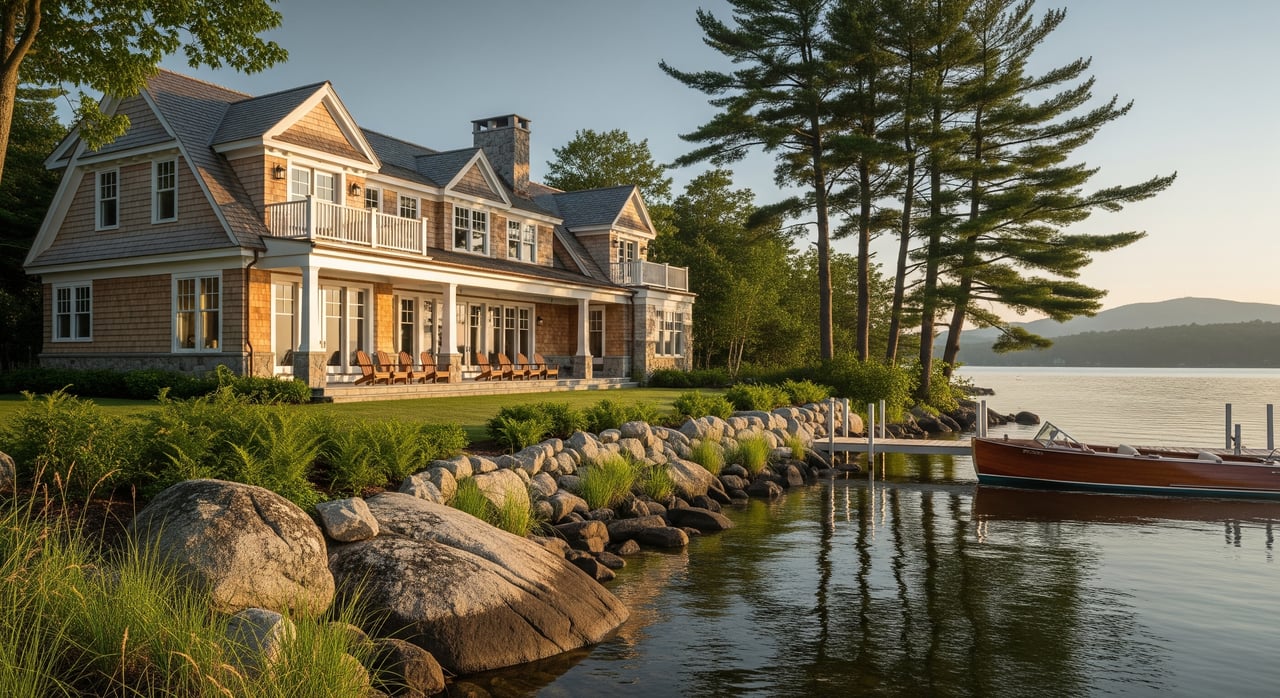
Thinking about a Meredith waterfront home but unsure how shoreland rules might affect your plans? You are not alone. From docks and landscaping to septic and additions, the rules around Lake Winnipesaukee are detailed and important. This guide helps you understand what applies, how to prepare as a buyer or seller, and the steps that keep your shoreline project on track. Let’s dive in.
NH shoreland rules in Meredith
New Hampshire’s Shoreland Water Quality Protection Act is the main statewide program that governs work near public waters. In Meredith, you work within both state rules and local ordinances. The Town of Meredith oversees zoning, building permits, and conservation review, while the New Hampshire Department of Environmental Services (NHDES) manages shoreland and wetlands permits.
Some projects also involve the U.S. Army Corps of Engineers if they include fill or dredge in regulated waters or wetlands. Flood insurance and floodplain issues tie back to FEMA mapping and local administration. Plan for both state and local review, and expect local rules to be as strict or stricter than state minimums.
Where shoreland rules apply
“Protected shoreland” is the area next to public waters where state rules apply. Lake Winnipesaukee and other public waters in Meredith fall under this program. The exact distance from the water, which structures are counted, and how to measure the shoreline are technical points defined by NHDES and local ordinances.
- Confirm whether the property fronts a public waterbody.
- Review official maps and a certified survey to understand boundaries.
- Ask Meredith’s Planning and Zoning staff how local overlays and setbacks apply.
Key rules that affect your plans
Vegetation and shoreline buffer
Maintaining a natural buffer protects water quality and reduces erosion. Selective pruning for views may be allowed under standards, but broad clearing is regulated and can trigger mitigation or restoration. If you plan to open up a view or replace landscaping, expect requirements to follow best management practices and possibly obtain permits.
Impervious surface and stormwater
Adding hard surfaces increases runoff toward the lake. Many shoreland projects must meet limits on impervious coverage or include stormwater treatment. You can reduce impacts with mitigation such as rain gardens, infiltration areas, and permeable paving. These measures are often required when you expand driveways, patios, or roofs.
Docks, moorings, boathouses, and shore walls
Docks and moorings typically need local approvals and must meet state standards for placement and size. Larger or permanent shoreline structures, including boathouses and seawalls or retaining walls, face stricter review and may require both state and federal permits. Work that affects water flow, sediment, or navigation is closely scrutinized.
Septic systems and wastewater
Septic systems near the shore are a top concern. Replacements or repairs must meet location and design standards intended to protect the lake. If you are selling, gather inspection records, pump-out dates, and any state or local compliance letters. If you are buying, verify the system’s age, location, and feasibility for future replacement.
Excavation, fill, and grading
Grading, adding fill, or reshaping the shoreline generally requires permits and erosion control plans. Expect to install silt fencing, manage runoff during construction, and follow any seasonal work restrictions.
Wetlands and floodplains
Adjacent wetlands and mapped floodplains can change what you can build and how you design it. Some shoreland projects overlap with regulated wetlands, which require additional review. If the property lies in a FEMA flood zone, that can affect insurance and local permitting.
Nonconforming structures
Many lake homes have pre-existing features that do not meet current standards. Rules for repairing, expanding, or rebuilding these nonconforming structures differ from rules for new construction. You may need a variance from the Zoning Board of Adjustment.
Enforcement and restoration
Unauthorized work can lead to fines and orders to restore the shoreline. During a sale, missing permits for docks, additions, or shoreline work can delay closing. Keep a complete file of approvals to protect your timeline and value.
Your permitting roadmap
1) Confirm jurisdiction
Start with Meredith’s Planning and Zoning and Building Departments and the NHDES Shoreland and Wetlands programs. Clarify which permits you need and whether a federal review applies.
2) Schedule a pre-application review
Pre-application check-ins help you identify wetlands, conservation easements, septic constraints, and shoreland buffer rules. Early feedback reduces redesigns and surprises.
3) Prepare a complete application
Typical materials include a certified survey showing the reference or mean water line, topography, shoreland buffer delineation, existing and proposed structures, septic location, and erosion control plans. Some projects also require stormwater designs or mitigation plans.
4) Understand boards and timelines
Local boards may include the Planning Board, Zoning Board of Adjustment, and Conservation Commission. Simpler approvals can take a few weeks. More complex shoreland or wetlands permits can run several months. Federal review adds time.
5) Keep records organized
Maintain copies of all permits, variances, surveys, septic designs and inspections, and correspondence with the town and NHDES. Organized documentation speeds buyer due diligence and protects you during resale.
Buyer due diligence checklist
- Confirm the property is on a public waterbody and within the protected shoreland zone.
- Order a certified survey showing the water line, setbacks, and all improvements.
- Request copies of permits for docks, additions, and shoreline or major landscaping work.
- Review septic records: inspection reports, pump-out dates, age, location, and any compliance letters.
- Check for recorded easements, shared shorefront rights, or association rules affecting docks and boating.
- Verify mooring or dock rights and any harbormaster requirements.
- Check FEMA flood zone status and any elevation certificates and insurance needs.
- Ask about past enforcement notices or required restoration.
Seller pre-listing checklist
- Gather all permits, variances, surveys, and septic records for disclosure.
- If any past work lacked permits, talk with the town and NHDES about options to cure or document.
- Consider a shoreline health review and light buffer improvements to boost appeal.
- Disclose shared access, dock agreements, or association obligations.
Planning upgrades or repairs
- Engage early with Meredith officials and NHDES to confirm what is allowed.
- Use best management practices for erosion control and choose native plantings in the buffer.
- Secure a shoreline survey before designing projects tied to setbacks.
- Plan for mitigation if you increase impervious area.
Local insights for Lake Winnipesaukee
Lake Winnipesaukee is the largest lake in New Hampshire, and its scale brings more attention to docks, moorings, and navigation. Shared docks and communal waterfront are common on the larger coves and association shorelines. Meredith’s local rules and conservation goals can be more restrictive than statewide minimums, so early coordination with town boards and the Conservation Commission pays off.
Protecting value and staying compliant
A healthy, well-documented shoreline is a selling point. As a buyer, you gain confidence when you see permits, clear surveys, and stable buffers. As a seller, you avoid delays and retain negotiating power when your records are complete and your shoreline work aligns with current standards. With the right planning, you protect the lake you love and the value of your Meredith home.
If you would like tailored guidance for your property, connect with the local waterfront specialists at Mulligan Property Group for a private consultation.
FAQs
What are NH shoreland rules for Meredith waterfront homes?
- New Hampshire’s shoreland program regulates work near public waters like Lake Winnipesaukee, and Meredith’s local ordinances also apply to setbacks, docks, vegetation, and stormwater.
Do I need permits to install or change a dock on Lake Winnipesaukee?
- Yes, docks typically require local approvals and must meet state standards, and larger or permanent changes can trigger state and sometimes federal review.
Can I clear trees to improve my lake view in Meredith?
- Limited, selective pruning may be allowed, but broad clearing in the shoreland buffer is regulated and can require mitigation or restoration under state and local rules.
How do shoreland rules affect septic systems near the lake?
- Septic repairs or replacements must protect water quality and meet location and design standards, so confirm feasibility, age, and records with local health officials and septic designers.
What happens if previous owners did unpermitted shoreline work?
- Unauthorized work can lead to fines and restoration orders, so request documentation during due diligence and consult the town and NHDES about options.
Are boathouses and seawalls allowed on Meredith waterfronts?
- These structures face stricter review than docks and often require multiple permits, including state and sometimes federal approvals, depending on design and impact.
How long do shoreland and wetlands permits take in Meredith?
- Simple projects may be approved in weeks, while complex shoreland or wetlands reviews can take several months, and federal review can add time.