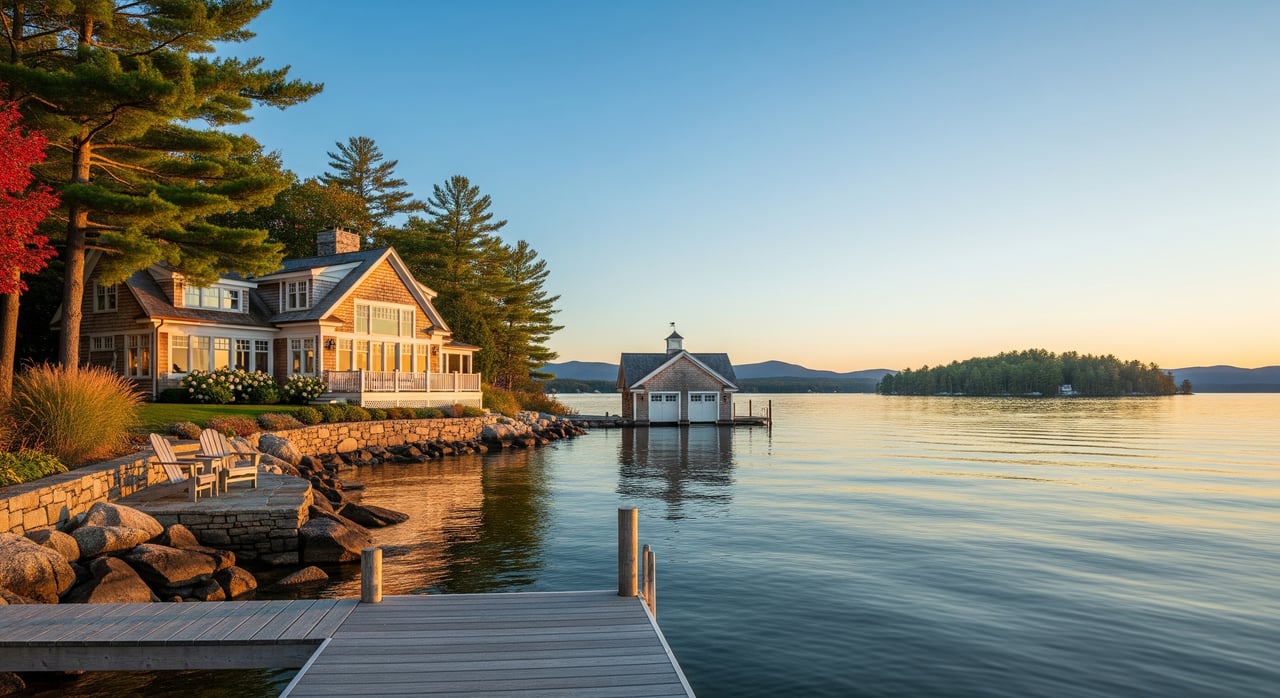
Trying to choose between a true lakefront home and a property with lake access on Lake Winnipesaukee? You are not alone. Each option delivers a different mix of convenience, cost, and long‑term value, and the details in Moultonborough can be nuanced. In this guide, you will learn what “lakefront” and “lake access” really mean, how rules and permits affect use, what to expect for maintenance and insurance, and a simple checklist to protect your purchase. Let’s dive in.
What lakefront means here
When a property is lakefront on Winnipesaukee, the land touches the shoreline and you can reach the water from your yard. With that location often come littoral rights, such as the ability to apply for a private dock or mooring and to use the shoreline, subject to state and local rules. Your actual rights depend on the deed language, recorded plans, and permits that have been issued.
In Moultonborough, shoreline work like docks, retaining walls, or boathouses typically requires review by New Hampshire Department of Environmental Services and may also require town approvals. The size, location, and use of any dock or mooring are regulated. Before you buy, verify what exists today and whether those rights transfer with the property.
Lakefront parcels frequently carry a market premium. Buyers value the view, privacy, and walk‑to‑water access, which can translate to stronger resale demand. Taxes can also be higher due to assessed value.
What lake access means
Lake access properties do not touch the shoreline, but you still have a way to use the lake. That access might be deeded through an easement or right‑of‑way, provided by a neighborhood or association beach and dock system, or available via public launches and beaches. The usability of that access depends on the recorded rights and rules.
If your access is through an association, review the covenants, fees, guest policies, parking rules, and whether there are waitlists for moorings or dock slips. If your access is deeded, read the easement to confirm exactly what you can do, how you reach the water, and any maintenance obligations. Public access points are open to everyone, so parking and peak‑season crowds can vary.
Lake access homes often offer a more attainable price point while still delivering the Winnipesaukee lifestyle. Your experience will depend on distance to the access site, parking, and whether dock or mooring use is guaranteed.
Key differences at a glance
Access and convenience
- Lakefront: walk out your door to swim or launch a boat. Maximum convenience and privacy.
- Lake access: use a shared or deeded location. You may drive or walk, and there can be rules or schedules.
Price and taxes
- Lakefront: typically higher purchase price and assessed value due to frontage.
- Lake access: generally lower price with possible HOA or association fees.
Docks and moorings
- Lakefront: private dock or mooring may be possible with permits and recorded rights.
- Lake access: dock space or moorings often limited by association rules or waitlists.
Insurance and risk
- Lakefront: confirm flood zone, elevation, and coverage for wind, ice, and storm events.
- Lake access: usually similar to inland homes, unless close to shoreline or in mapped flood areas.
Maintenance and stewardship
- Lakefront: shoreline stabilization, dock care, and seasonal removal or winterizing are common.
- Lake access: association maintains shared beaches, docks, and roads, funded by dues or assessments.
Rules and permits to know
Shoreline and wetlands
- Altering the shoreline often triggers state review. Shoreland protection and wetlands rules set how close you can build or expand and what materials or methods you can use.
Docks and moorings
- Dock size, location, and number are regulated. Moorings may require permits and harbor review. Whether dock or mooring rights transfer depends on what is recorded and permitted today.
Septic systems and wells
- Older waterfront systems can be close to the lake and may not meet current setbacks. Plan for septic inspections and, if needed, upgrades. Always test well water for quality.
Floodplain and erosion
- Check FEMA flood maps to see if any structure sits in a Special Flood Hazard Area. Shorelines can experience ice and storm action, and some owners carry specific coverage for those risks.
Invasive species and lake programs
- Lake Winnipesaukee has active programs to manage invasive aquatic plants. Some associations charge assessments to support stewardship. Ask about local inspection requirements, treatment history, and any related costs.
Town contacts in Moultonborough
- Zoning and building for setbacks and coverage.
- Health officer for septic and well rules.
- Harbor or select board for moorings and public access.
- Assessor and registry for deeds, lot lines, and tax records.
Costs, value, and resale
Lakefront value
- Direct frontage is finite, and demand remains strong, especially for year‑round homes with quality water frontage and views. Lakefront properties typically see higher sale prices and solid resale appeal. Pricing varies by frontage, exposure, water depth, and overall condition.
Lake access value
- Deeded or association access draws buyers who want the lake lifestyle at a more attainable price. Resale strength depends on the clarity and quality of access rights, the condition of shared facilities, and proximity to the access site.
Taxes and assessments
- Lakefront parcels usually have higher assessments. Lake access homes may have association dues, special assessments for beach or dock upkeep, invasive species management, and private road maintenance.
Insurance
- Waterfront premiums can be higher if a home is in or near a mapped flood area or has a history of wind or ice claims. Even outside FEMA zones, lenders and insurers may ask for elevation information and detailed coverage.
Maintenance
- Plan for shoreline stabilization, dock repairs, and winterizing on lakefront. For lake access, budget association dues and understand rules around dock assignment, guest passes, and parking.
Lifestyle and daily use
Day‑to‑day rhythm
- Lakefront living means easy morning swims, quick boat outings, and private shoreline moments. Lake access living can be very similar but may involve a short drive, carting gear, and working within shared schedules.
Seasonality
- Summer is busy with boating and swimming. Winter brings ice fishing, snowmobiling, and snow. Many docks must be removed or winterized, and ice pressure can affect shoreline structures.
Parking and guests
- Lakefront homes typically have private parking and room to host. Lake access sites can have limited parking and guest rules, which matter for everyday use and for resale.
Utilities and systems
- Waterfront cottages can have older systems that require updates to meet current rules. Confirm the status of septic, well, and electrical service, and factor in costs if upgrades are needed.
Smart due diligence checklist
Title and deed
- Confirm the exact boundary to the water and whether the shoreline is owned to the high water mark. Verify recorded easements, rights of way, and covenants that affect dock use, moorings, parking, and guest policies.
Survey
- Request a current survey showing lot lines, shoreline, structures, and the location of any shared access or paths.
Permits and structures
- Verify permits for docks, boathouses, seawalls, and prior shoreline work. Ask if any mooring permit exists and whether it transfers with the property.
Septic and well
- Hire a licensed septic inspector, request design and service records, and complete required testing. Test well water for bacteria and nitrates.
Flood and insurance
- Check FEMA maps and request any elevation certificates. Obtain home and flood insurance quotes before finalizing your offer.
Environmental and lake programs
- Ask about prior shoreline stabilization, erosion issues, and invasive species treatment history. Confirm whether any lake association assessments apply.
Association documents
- If access is via an association, review bylaws, rules, budgets, meeting minutes, reserve studies, and any current or pending assessments. Clarify rental, pet, and guest policies.
Winter and road maintenance
- Confirm who plows and maintains roads and access sites, what fees apply, and any seasonal limits on parking or launch access.
For sellers: prepare to succeed
Gather documents early
- Assemble permits for docks and shoreline work, septic designs and service records, surveys, association documents, and any mooring approvals. Buyers move faster when they see clear records.
Address system questions
- If your septic or well is older, consider pre‑listing inspections. Clarity reduces surprises and strengthens negotiations.
Present the lifestyle
- Showcase safe dock access, water depth, sun exposure, and proximity to amenities. For lake access homes, highlight the quality of the beach, parking, and the status of any dock allocations.
Market to the right audience
- Premium visuals, clear shoreline details, and thoughtful storytelling about how the property lives by season help attract qualified buyers, including those from outside the region.
Which choice fits you
Choose lakefront if you prioritize immediate water access, privacy, and long‑term waterfront value and can commit to shoreline stewardship and higher maintenance. Choose lake access if you want the lake lifestyle at a lower entry point and are comfortable using shared facilities with defined rules.
Both options can be excellent investments on Winnipesaukee when the deed rights, permits, and maintenance plans are clear. The best fit comes down to how you plan to live at the lake, your budget for ongoing care, and your timeline.
Get local guidance
You deserve advice grounded in Winnipesaukee’s specific rules, shoreline realities, and market patterns. If you are weighing lakefront versus lake access in Moultonborough, request a tailored comparison with deed and permit review, insurance guidance, and a strategy for resale. Schedule a private consultation with Unknown Company to move forward with confidence.
FAQs
What does “deeded lake access” mean in Moultonborough
- It is a recorded easement or right‑of‑way tied to the property that outlines how you reach and use the lake. Rights, limits, parking, and maintenance duties come from the recorded document.
Do dock or mooring rights transfer when buying a waterfront home
- Only if they are deeded to the parcel or covered by permits that run with the property. Association dock space or a mooring may not transfer automatically, so verify records and permits.
Are there restrictions on adding or enlarging docks on Winnipesaukee
- Yes. Shoreland and wetlands rules, along with local regulations, control size, location, and installation. Most projects require permits and documented approvals.
Do I need flood insurance for a house near Lake Winnipesaukee
- Lenders require flood insurance only if a structure is in a mapped Special Flood Hazard Area. Flood risk can exist outside mapped zones, so obtain quotes and review FEMA maps.
How big is the price gap between lakefront and lake‑access homes
- It varies by frontage quality, views, location, and market timing. Review current MLS comparisons for Moultonborough and nearby towns to understand the latest spread.