Is quick dockside access worth the premium, or will a simple buoy do the job? If you are eyeing a home in Alton or planning a summer on Alton Bay, choosing between a boat slip and a mooring is one of the most important decisions you will make. The right setup affects how you use your boat, what you spend, and what transfers when you buy. In this guide, you will learn the practical differences, local rules to confirm, true cost categories, and a step-by-step checklist for buyers in Alton. Let’s dive in.
Slip basics: what you get
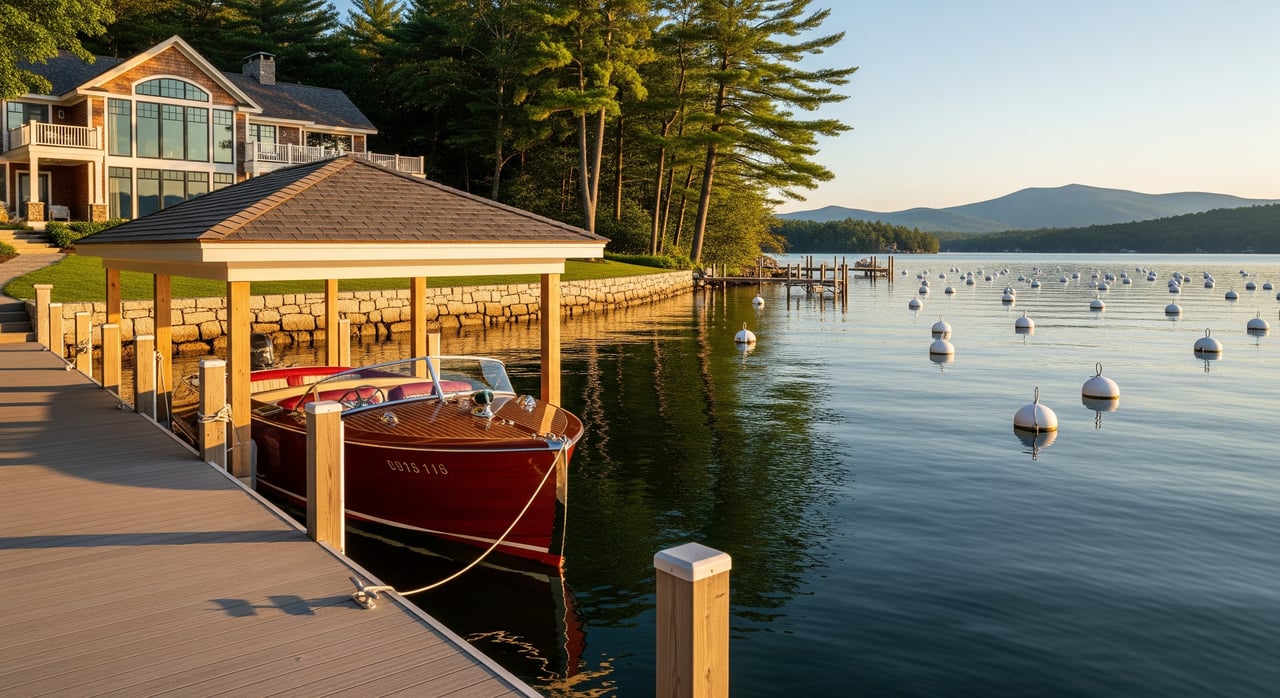
A slip is a defined space at a dock where you tie up alongside piers or pilings. You walk right down the dock to board, which makes loading gear, family, and provisions much easier. Many slips offer shore power, water, lighting, and direct parking or ramp access.
You will usually lease a slip seasonally from a marina, though some communities and associations assign slips to owners. In rare cases, a slip can be deeded or tied to a condominium document. Lease terms vary, including what utilities are included, rules on subleasing, and whether the lease can transfer during a property sale.
Mooring basics: how they work
A mooring is an anchored buoy set on the lake bottom where your boat remains afloat. To reach it, you typically use a tender or dinghy unless the buoy sits very near shore and you have safe access. Moorings do not include shore power or water, and you rely on shore services for fueling, pump-out, or repairs.
Moorings are often managed as seasonal permits by a municipal harbormaster or by private marinas. Placement, boat-size limits, and renewal rules are controlled locally. In Alton, you should confirm current mooring policies with the Town’s harbormaster and any marina you are considering.
Key differences at a glance
- Convenience: Slips offer walk-on access for easy boarding and provisioning. Moorings require a tender ride and more planning.
- Cost: Slips are generally more expensive due to infrastructure and services. Moorings typically have lower annual fees but can include installation and inspection costs.
- Services: Slips often include or offer nearby electric, water, and dock amenities. Moorings have no built-in utilities at the buoy.
- Maintenance: Slips may involve dock maintenance responsibilities or association assessments. Moorings require periodic inspection of tackle and anchors, which may be handled by owners, marinas, or the municipality.
- Boat fit: Larger boats and those needing shore power usually benefit from a slip. Many boat sizes work well on moorings if depth and swing room are adequate.
- Seasonal care: Slips often require haul-out and winter storage planning. Moorings are typically removed or serviced seasonally.
Alton and Lake Winnipesaukee context
Alton sits at the southern end of Lake Winnipesaukee, a large freshwater lake with a strong summer season from Memorial Day through Labor Day. While there are no tides, seasonal water levels can change depth at both slips and moorings. This matters for draft, access, and the timing of installation and removal.
Demand is high across the lake, and availability is often tight. Waitlists are common for both slips and moorings, especially near Alton Bay and during peak holidays or events. To get an accurate picture, contact the Town of Alton Harbormaster for current permit rules and check with local marinas for seasonal supply, waitlist procedures, and services.
Permits, ownership, and transfers
Moorings in many New Hampshire towns, including Alton, are controlled by municipal rules. The harbormaster typically assigns locations, manages annual permits, and sets boat-size limits for specific mooring fields. Always confirm whether a mooring can transfer to a new owner or if the buyer must apply for a new permit.
Slips at commercial marinas are commonly seasonal leases, though some properties or associations may have assigned or deeded rights. Lease terms vary on what is included, how renewals work, and whether a buyer can assume the seller’s spot. If a listing claims an associated slip or mooring, review the property deed, condominium or HOA documents, and ask for written confirmation.
Never assume a mooring or slip will convey with the sale. Many mooring permits are tied to a person or to the municipality. Marinas often require approval for any lease transfer. Plan on a thorough title, deed, and permit check during due diligence, and coordinate with the harbormaster, marina, and local professionals to document any rights in writing.
You should also confirm compliance with shoreline and wetlands regulations before adding or modifying docks. State and local agencies may require permits for pilings, dock changes, or mooring systems. Be aware of pump-out rules, no-discharge zones, and invasive species prevention requirements if you plan to berth a boat on the lake.
Costs and budgeting: what to expect
Plan your budget in categories rather than relying on a single number. Local rates vary by marina, slip size, services, and permit rules.
Common cost categories to confirm:
- Seasonal slip fees or annual slip rental
- Annual mooring permit fees plus installation and periodic inspection
- Utilities and dock assessments for shared facilities
- Dock and piling maintenance or marina association fees
- Winter storage, haul-out, shrink-wrap, launching, and spring commissioning
- Security deposits or membership fees where applicable
Insurance and taxes are part of the picture. Some insurers factor in whether your boat is on a slip, on a mooring, or stored on land. If a slip right is deeded to a property, confirm how that is recorded and taxed locally. Marina leases are not generally treated as real property.
When comparing options, ask marinas or associations to detail what is included in the fee schedule. Parking, shore access, electric metering, pump-out, launch service, and guest policies can affect the total value. For moorings, verify who handles seasonal removal and inspection, and whether you or a third party is responsible for upkeep.
Buyer checklist for Alton
Use this checklist to evaluate a property or plan your seasonal setup in Alton:
- Identify your boat needs
- Confirm length, beam, and draft. Decide how often you plan to use the boat and whether you will stay aboard overnight. This drives slip vs. mooring suitability.
- Verify availability and assignment
- Contact the Town of Alton Harbormaster and specific marinas for current availability, waitlists, and assignment rules. Ask about transfer policies.
- Confirm conveyance in a sale
- Review the deed and HOA or condo documents. Request written confirmation of any slip or mooring rights. If no written right exists, learn the process to obtain a permit or lease.
- Inspect the dock if a slip is included
- Check dock condition, pilings, flotation, and electrical hookups. Verify that slip width and length fit your boat and ask about shared maintenance responsibilities.
- Check depth and swing room for moorings
- Confirm depth at seasonal low-water conditions and verify the swing radius and distance from shore. Identify nearby obstructions.
- Plan for seasons and storms
- Ask how moorings are removed and inspected. Learn the marina’s storm procedures and where you can haul out during high water or severe weather.
- Consider parking and shoreline access
- Confirm parking, launch privileges, and any tender storage or dinghy dock options. Moorings often require a secure place to stage your tender.
- Confirm insurance implications
- Check with your insurer on berth requirements, liability coverage, and any discounts or conditions tied to marina security or storage type.
- Verify environmental and regulatory compliance
- Ask about shoreline permits for any future dock changes, and confirm invasive species cleaning requirements and pump-out rules.
- Get costs and terms in writing
- Request fee schedules, lease length, renewal options, cancellation terms, and responsibilities for repairs and winterization. Document everything.
Which option fits your boating?
Choose based on how you use your boat, not just what is available today. In Alton, both slips and moorings can work beautifully when matched to your needs.
When a slip is likely better:
- You want easy walk-on access for frequent outings with family or guests
- You need shore power, water, or dockside services
- You have a larger vessel that benefits from a stable berth and on-dock amenities
When a mooring is likely better:
- You prefer lower ongoing costs and do not need shore power
- You own a small to medium craft and are comfortable using a tender
- You value a quieter placement away from marina traffic
Alternatives when inventory is tight
If you cannot secure a seasonal slip or mooring right away, consider a mixed strategy. Many owners keep a mooring for summer and arrange winter dry storage or a haul-out schedule. Dry stack, trailer storage, and private boat garages are valid alternatives when slips or moorings are scarce or price-prohibitive. For occasional visits, transient slips may be available on short notice.
Next steps with local experts
The best path is to confirm the facts early. Speak with the Town of Alton Harbormaster about mooring permits, placement rules, renewals, and transfer policies. Call specific Alton Bay marinas about seasonal slip supply, waitlists, and services. If you are buying a waterfront property, align your due diligence around the deed, HOA documents, and written confirmations from the municipality or marina.
If you want a seasoned, local guide through these details, connect with the team that lives this work year-round. As trusted stewards of waterfront property in New Hampshire’s Lakes Region, we help buyers and sellers verify conveyance language, coordinate with marinas and municipal offices, and make confident decisions aligned with how you plan to use the lake.
Ready to talk through your goals on Lake Winnipesaukee? Schedule a private consultation with Mulligan Property Group.
FAQs
Do boat moorings or slips automatically transfer when I buy a home in Alton?
- No. Transfers are not automatic. Get written evidence in the deed or association documents and confirm with the harbormaster or marina before closing.
How long are slip or mooring waitlists in Alton Bay?
- Wait times vary and can be long in peak areas and seasons. Contact the Town of Alton Harbormaster and local marinas for current policies and timelines.
Who maintains a mooring on Lake Winnipesaukee near Alton?
- It depends. Some moorings are maintained by the municipality, others by owners or marinas. Confirm responsibilities and inspection schedules in writing.
Are there size limits for boats on certain moorings or slips?
- Yes. Mooring fields and marinas set maximum length, beam, and draft limits. Verify your boat’s fit before committing to a permit or lease.
What seasonal steps should I plan for with a mooring or slip?
- Plan for fall removal and inspection of moorings, and arrange winter storage or haul-out for boats kept in slips. Confirm spring launch timing as well.
Do changing lake levels affect moorings and slips in Alton?
- Yes. While Winnipesaukee is not tidal, seasonal water levels can change depth at slips and moorings. Check low-water conditions for draft and swing room.