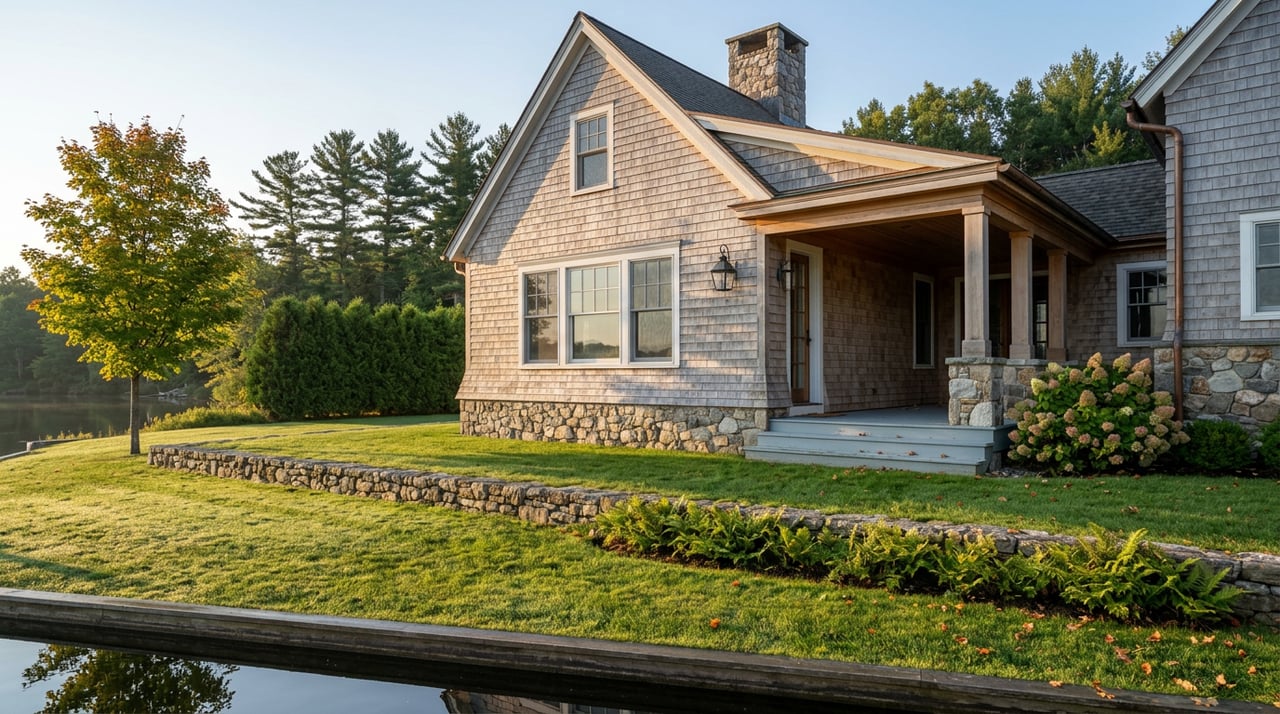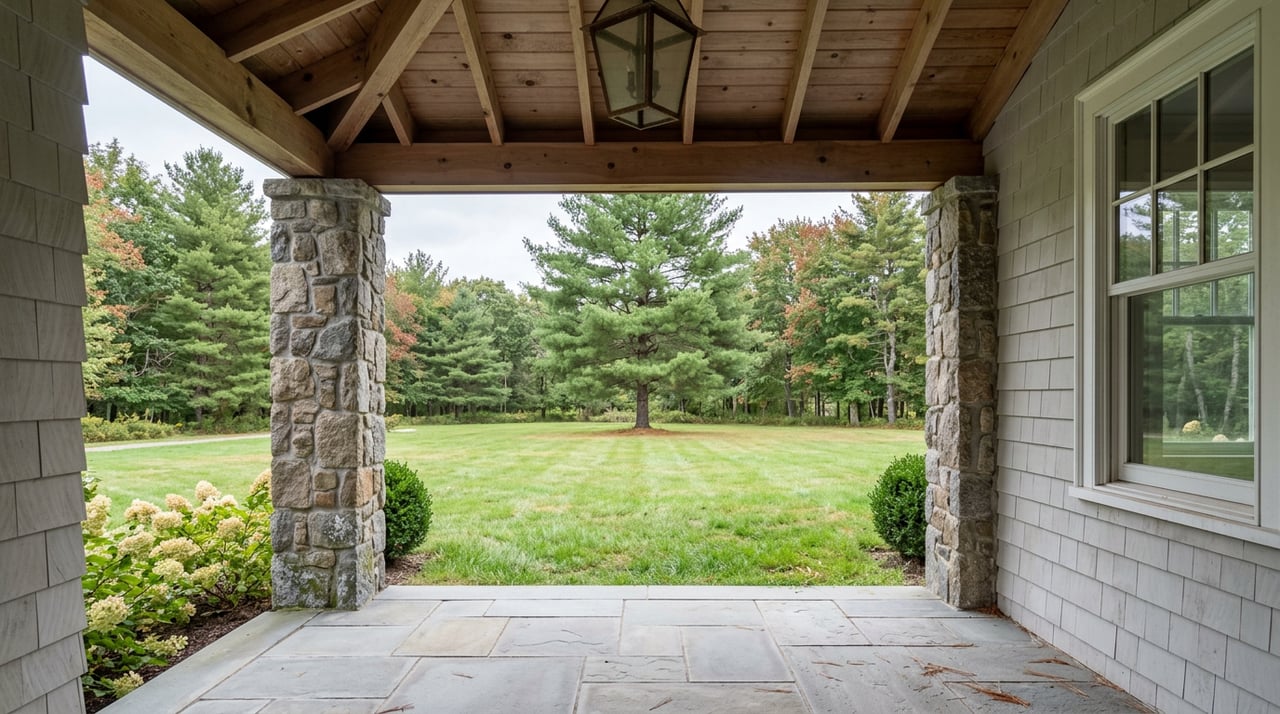
Scroll through waterfront listings on Lake Winnipesaukee's eastern shore and you'll see the same three words again and again: low-tax Tuftonboro. It shows up on a townhouse association with a shared beach. It shows up on a custom Adirondack-style build with 275 feet of shorefront. It even shows up on parcels that require a boat to reach, where the description promises a "low-tax town" in one line and warns "only accessible via boat" a few lines later. The phrase has become shorthand, repeated so often it stops registering as a claim and starts reading as a fact.
It is a fact. Tuftonboro's tax rate really is lower than most of its lake neighbors. But the number every listing quotes, the posted municipal rate, is not the number that determines what a buyer actually pays. And once you look at the number that does, the story gets more interesting than "cheaper town, smaller bill."
The Rate on the Sign Isn't the Rate on the Bill
New Hampshire towns set a tax rate each fall, expressed as dollars per $1,000 of assessed value. For 2025, Tuftonboro's rate came in at $6.40. Wolfeboro's, set the same season, landed at $8.36. Moultonborough, a few miles up the shoreline, posted $5.33, according to the New Hampshire Department of Revenue Administration's 2025 municipal tax rate report.
Read those three numbers side by side and the marketing claim already has a problem. Tuftonboro isn't the cheapest town on this stretch of the lake. Moultonborough is. If a buyer is choosing between the two purely on the rate printed in listing copy, "low-tax Tuftonboro" oversells its own case.
But the posted rate only tells you the multiplier. It says nothing about what that multiplier is applied to, and that's where the comparison flips. New Hampshire requires towns to keep assessed values within a band of 90 to 110 percent of actual market value, with revaluations required at least every five years under state law. Tuftonboro's own assessing office reports that its median assessed value currently sits at about 79.6 percent of market value, below that required range. In plain terms, homes in town are being taxed against a number smaller than what they'd likely sell for today.
That gap is why the effective rate, the rate a buyer actually experiences once assessed-to-market value is factored in, tells a different story than the posted rate. Recent property-tax analysis of Carroll County records puts Tuftonboro's effective rate at 0.64 percent, with a median annual tax bill of $3,368. Wolfeboro's effective rate comes in at 1.59 percent, more than double, with a median home value of $342,100 and a median annual bill of $5,003.
Here's the comparison in one place:
| Town | 2025 Posted Rate (per $1,000) | Effective Rate | Median Annual Bill |
|---|---|---|---|
| Tuftonboro | $6.40 | 0.64% | $3,368 |
| Wolfeboro | $8.36 | 1.59% | $5,003 |
| Moultonborough | $5.33 | Not published | Not published |
Zillow put the average Tuftonboro home value at $621,222 in mid-2026. That's nearly double Wolfeboro's median home value, and yet the Tuftonboro bill is lower in dollar terms, not just as a percentage. A buyer comparing towns on the posted rate alone would guess the gap between Tuftonboro and Wolfeboro is modest, about two dollars per thousand. The real gap, measured in what shows up on the annual bill, is closer to a third less in total dollars owed, on a home worth substantially more.
Why the Discount Is Bigger Than the Sign Suggests, and Why It Might Not Stay That Way
The mechanism here isn't that Tuftonboro spends less to run itself. It's that the town's assessed values are trailing the market, which shrinks the base against which the posted rate is applied. A wide, high-value waterfront tax base combined with assessments that haven't caught up to recent sale prices produces a rate that looks moderate on paper and an effective bill that's smaller still.
That's good news for a buyer closing this year. It's worth treating as a temporary condition rather than a permanent feature. State law requires municipalities to true up assessments to market value on a five-year cycle, and Tuftonboro is currently running below the required 90 to 110 percent band. When that correction happens, whether through a scheduled revaluation or a market shift that outruns the assessment schedule, the effective rate moves closer to the posted rate, and the bill moves with it. A buyer weighing "low-tax Tuftonboro" against "higher-tax Wolfeboro" should ask not just what the bill is this year, but when the town's next revaluation is scheduled and how the current assessment ratio compares to the target range.
Moultonborough's lower posted rate raises the same kind of question in reverse. Without a published effective rate or median bill for the town, it's not possible to say whether its advantage on paper holds up the way Tuftonboro's does. The honest answer for a buyer cross-shopping both towns is to ask each assessor's office for the current assessment ratio before assuming the posted rate tells the whole story.
The Same Phrase, Attached to a Property With No Bridge
The "low-tax" pitch gets more complicated on Tuftonboro's most unusual inventory: island property. Cow Island sits in the lake off Tuftonboro's shore, roughly 520 acres, the second-largest non-bridged island on Winnipesaukee behind Bear Island. There is no bridge and no year-round road connection. Every trip on or off requires a boat, in every season, which is a meaningfully different ownership experience than a mainland lot with a driveway.
The island has real history behind it. Camp Idlewild operated there as a boys' camp from 1891 into the 1970s, with the mail boat making regular stops to deliver letters to campers. Gus' Lodge, also known locally as Mama Lucy's, ran for years as the lake's only island restaurant before closing. Today the island is a mix of private residences and vacant lots, several of them currently listed, most of them still carrying that same "low-tax Tuftonboro" line in their marketing copy.
What that line leaves out is the cost structure that comes with island ownership specifically. A buyer needs either a private dock on the island itself or an arrangement at a mainland landing such as Harilla Landing or a slip at a facility like Mountain View Yacht Club, plus a boat capable of making that crossing reliably through the season. None of that shows up in a property tax comparison, and none of it is optional for someone planning to actually use the property rather than admire it from a listing photo. The tax savings are real. They are also only one line item in a total cost of ownership that looks different on an island than it does on a paved road.
What to Ask Before the Tax Line Becomes the Deciding Factor
If you're comparing Tuftonboro against Wolfeboro or Moultonborough on the strength of the tax pitch, a few questions get you past the marketing copy faster than the posted rate will:
What is the current assessment ratio, and how does it compare to the 90 to 110 percent band the state requires? When is the town's next scheduled revaluation, and how much has the local market moved since the last one? If the property is on an island or otherwise separated from a maintained road, what does the annual carrying cost look like once dock access, boat maintenance, and insurance are added to the tax line?
None of those questions show up in a listing description built around three words. All three shape what you'll actually pay to own the property, this year and after the town's next look at its own numbers.
If you're weighing a waterfront purchase anywhere on this stretch of Winnipesaukee and want the assessment history, revaluation timeline, or island-specific cost breakdown for a specific property, Ellen Mulligan and the Mulligan Property Group can walk through the numbers town by town before you write an offer. Schedule a private consultation to get the full picture, not just the line from the listing.