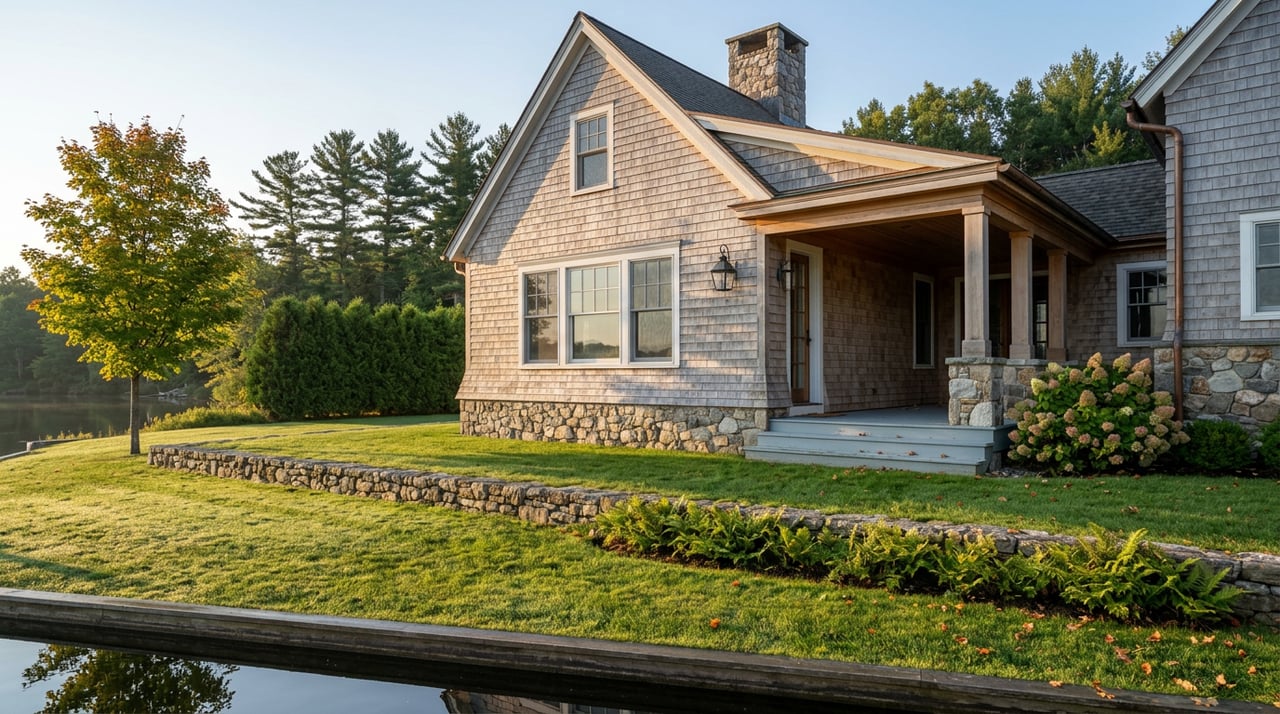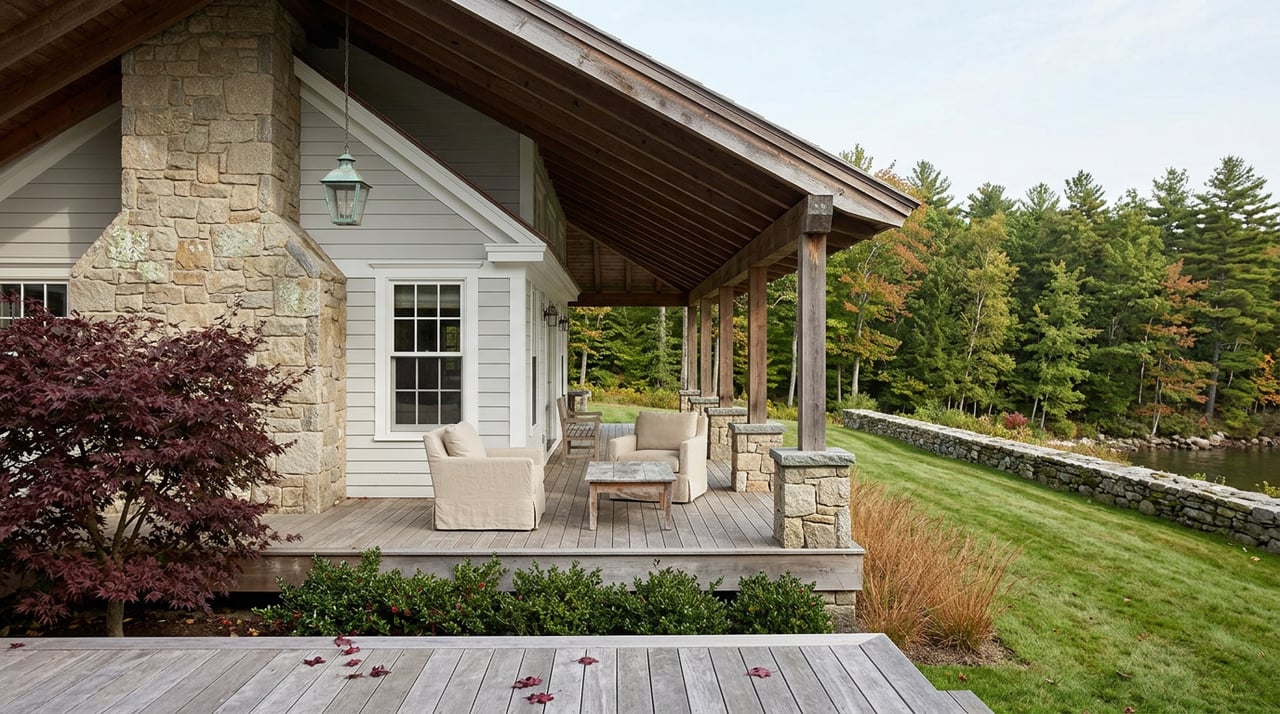
A buyer scrolling listings in Center Harbor will see the word "waterfront" attached to homes that have almost nothing in common. One sits on a lake governed by a state speed statute written specifically for it. Another sits on a lake where the real rulebook comes from a century-old conservation nonprofit, not the state. A third sits on the reservoir that supplies drinking water to thousands of people in the next town over.
All three get called waterfront. All three get compared on the same spreadsheet of price per foot of frontage. None of them play by the same rules once you own the dock.
One Town, Three Waterfronts
Center Harbor's town line runs along three separate bodies of water: Lake Winnipesaukee, Squam Lake, and Lake Waukewan. Most buyers assume "Center Harbor waterfront" means Winnipesaukee, since that's the lake the town's harbor and downtown sit on. But a meaningful share of the town's shoreline touches Squam to the south and Waukewan along its northern edge, and each of those lakes answers to a different authority when it comes to what you can build and what you can drive across the water.
That distinction rarely shows up in a listing description. It shows up the week you try to permit a dock.
| Lake | Who actually governs it | Motor limits | Seasonal dock exemption caps at | Character |
|---|---|---|---|---|
| Winnipesaukee | State law (RSA 270-D) | 45 mph daylight, drops to 30 mph after dark | 40 feet | Large, developed, open to standard state rules |
| Squam | Squam Lakes Association guidance plus state permitting | 25 hp at the SLA's own public access | 40 feet | Mostly private shoreline, only one free public boat launch, strong screening norms |
| Waukewan | Town of Meredith (public water supply) plus state permitting | Personal watercraft banned since December 31, 1989 | 30 feet | Reservoir for roughly 3,000 Meredith residents, restricted zone near the water intake |
The dock column is the one worth sitting with.
Winnipesaukee: The Lake State Law Was Built Around
Winnipesaukee is the default assumption, and for good reason. It's large enough to clear every acreage threshold New Hampshire uses to regulate lake docks and boat slips, including the higher bracket the state reserves for its biggest water bodies. It has its own dedicated speed statute, RSA 270-D, which sets a 45 mph limit during daylight and drops to 30 mph after dark. If you've spent any time boating in New Hampshire, this is the rulebook you already know.
That familiarity is exactly why buyers stop asking questions once they see "Winnipesaukee" in a listing. The problem is that not every Center Harbor waterfront property is on Winnipesaukee.
Squam: The Lake the State Barely Has to Regulate
Squam Lake runs on a different kind of authority. The Squam Lakes Association, a nonprofit founded in 1904 in response to logging damage and pollution in the coves, still functions as the lake's de facto steward. Its public boat access caps motors at 25 horsepower, well below what you'd need for many of the runabouts common on Winnipesaukee. Its published shoreline guidance asks owners to keep a natural buffer within 50 feet of the water, thinning vegetation selectively rather than clearing it, so that homes stay screened from the lake rather than announcing themselves the way they often do on more developed shorelines. The SLA's own phrase for the goal is "see but not be seen."
None of this is written into a deed. It's cultural as much as regulatory, reinforced by a shoreline that runs roughly 62 miles, nearly all of it in private hands, with just one free public boat access on the entire lake. A buyer moving from a Winnipesaukee mindset to a Squam property is not just changing lakes. They're changing the assumptions their neighbors will hold them to.
Waukewan: The Lake That Also Has to Keep 3,000 People's Water Clean
Waukewan does something the other two don't. It supplies drinking water to the Town of Meredith, serving more than 3,000 residents and the village business district from an inlet near the lake's south end. That function shapes everything else about owning frontage there. Personal watercraft have been banned on Waukewan since December 31, 1989. There's a boat-restricted zone around the water intake, and anyone building or boating near it needs to contact Meredith directly rather than relying on a general state rule.
Waukewan also happens to measure 928 acres, according to state watershed data. That number matters more than it looks like it should.
The 72 Acres That Change Your Dock
New Hampshire's dock permitting rules include a shortcut. If you want to build a simple, removable seasonal dock, meet a short list of conditions, and skip the full wetlands permitting process, the state lets you self-certify through a notification rather than a formal application. One of those conditions is size, and the size cap depends on the lake.
On a waterbody under 1,000 acres, that exempt seasonal dock can run no more than 30 feet. On a waterbody of 1,000 acres or larger, the same exemption allows up to 40 feet. Squam, at somewhere around 6,800 acres, and Winnipesaukee, large enough to clear that line many times over, both qualify for the 40-foot allowance. Waukewan, at 928 acres, falls 72 acres short of the threshold and is capped at 30.
That 10-foot gap is not a matter of taste or budget. It's a line drawn by the state based on lake size, and it means a buyer set on a longer dock at Waukewan has two options: accept the shorter exempt dock, or go through New Hampshire's full wetlands permitting process to ask for more, the same process required on any lake for a permanent structure regardless of size. Nothing about the listing price or the frontage footage tells you which situation you're walking into. Only knowing which lake you're on does.
What This Means Before You Write an Offer
A few questions are worth asking before you fall in love with a Center Harbor waterfront listing, and they matter more than the price per foot of frontage:
- Which of the three lakes is the frontage actually on? Winnipesaukee, Squam, and Waukewan are not interchangeable, even within the same town.
- If it's Squam, are you comfortable with a 25 hp limit at the public access and a screening expectation that predates most local zoning?
- If it's Waukewan, does your dock plan fit inside the 30-foot exempt threshold, or are you prepared for a full state permitting process?
- Is the dock you're inheriting or planning seasonal and removable, or permanent? The acreage-based shortcut only applies to seasonal docks. Permanent structures need full permitting no matter which lake they're on.
None of these questions show up in an MLS sheet. All of them show up at the point of sale, or worse, after closing, when a buyer discovers the dock they pictured isn't the dock the state will let them build.
A Few Questions Worth Asking First
Is the Squam Lakes Association a government agency? No. It's a nonprofit conservation organization founded in 1904. Its guidance carries real weight because most owners on Squam choose to follow it and because it partners closely with local and state agencies, but it doesn't have the same enforcement authority as a town zoning board or the state's wetlands bureau.
Can I still build a longer dock on Waukewan if I need one? Yes, but you leave the simplified exemption path and need to apply for a full New Hampshire Department of Environmental Services wetlands permit, which can allow a longer dock in cases like documented shallow water, at the cost of a longer and more involved review.
What if I want a boat with more horsepower than Squam's public access allows? The 25 hp cap applies to the Squam Lakes Association's own public launch. Owners who want a larger boat on Squam typically need a private dock to launch from rather than relying on that public access point.
Center Harbor's shoreline is genuinely three different ownership experiences wearing one zip code. Knowing which lake you're buying on, before you write the offer, is the difference between planning a dock and discovering you can't build the one you imagined.
If you're comparing Center Harbor waterfront and want someone who can walk the specific parcel, the specific lake, and the specific permitting path with you, Ellen Mulligan can help. Schedule a private consultation before you fall for a view that comes with rules you haven't seen yet.